Tuesday, January 13, 2015

Begin Anew Each Day


The New Year offers a wonderful opportunity to begin anew.  As this sweet picture from Sketches in Stillness reveals, we can chose to begin anew each day and even in each moment.  Our children can as well.  If things are not going well, request to start over.  As a young child and sometimes even as a teen, my daughter would request, "Let's start today over."  If was wonderful to do so!

Tuesday, June 10, 2014

Things Our Dads Teach Us When They Aren’t Even Looking


Many thanks to Parkland Life Magazine for allowing us to reprint this article that I wrote for their June 2013 issue.

My dad taught me things about life when he wasn’t even looking.  He wasn’t consciously teaching.  He was simply being who he was, going about his day.  He didn’t know that I was looking and learning.  I had no idea of the breadth and depth of what I learned from my dad until I became an adult.  His teachings filled my life when I became a parent. 

Some of his best lessons took place when he was doing his favorite things, like driving the boat down the Crystal River, cooking his special breakfast for the family or lying in bed on a Sunday morning reading the paper.  At those times, he had a focused yet pleased look on his face, like everything had come together in that moment and was exactly as it was supposed to be.  Those were some of my favorite memories of my dad as well as my earliest exposures to what Eckhart Tolle talks about in the Power of Now.  Daddy had no idea he was teaching me about flow and being present.  He thought he was just cooking breakfast and watching the water in front of the bow.   

My colleague Jane Sisoian of Positive Solutions for Children and Families [www.positivesolutionsinfo.com] has had similar experiences.  Her favorite memories of her father are when he would take her fishing.  He would help her put the live worms on the fish hook and they would patiently wait for a fish to come along and bite.  Jane said, “His patience, kindness and positive attitude are the qualities he had that made him so special.  It is those qualities that have helped me in my adult years to be a better mom and teacher.”  Jane’s own patience, kindness and positive attitude have influenced the children in her third grade classroom, her own children and the adults who participate in her Redirecting Children’s Behavior™ course.  I would go so far as to say that her dad even influenced the name of her company!

The biggest lesson from my dad was about responsibility.  He never talked with me about being responsible.  He demonstrated it daily.  He finished everything that he started.  He always happily assisted others.  He took pleasure in doing a good job, and he appreciated that quality in those around him.  He persevered.  He always went the extra mile and gave 110 percent.  That was who he was.

In All I Really Need to Know I Learned in Kindergarten, Robert Fulghum wrote about the people in our lives who “teach us, bless us, encourage us, support us, uplift us in the daily-ness of life.”  We don’t tell these people about their influence.  They never know.  And we are that person to the people in our own lives, too.  Fulghum said, “There are those who depend on us, watch us, learn from us, take from us.  And we never know.  Don’t sell yourself short.  You may never have proof of your importance, but you are more important than you think.”

On this Father’s Day – and every day – I am grateful for the lessons my dad taught me when he wasn’t even looking.  Right now, dads everywhere continue this tradition, and their children are watching and learning.  In those moments – especially those filled with the wonderful, stillness of being – dads are teaching precious life lessons.  My wish for you, dads, on this Father’s Day, is to experience at least a glimpse of how valuable and influential you are just by being who you are.  There is so much going on when you aren’t even looking!    

Thursday, April 3, 2014

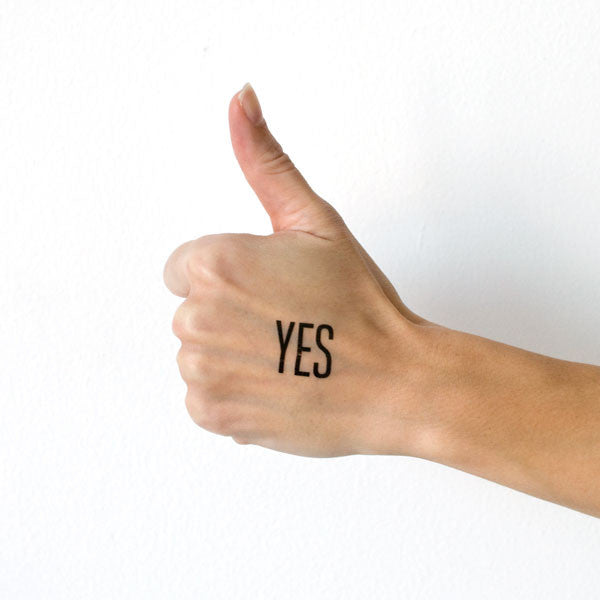
The Wonderful Results of Saying "Yes"


Around the time that your child began talking or walking, did you notice that a key component of your vocabulary was the word "no"?  “No, don’t touch that!” “No, I am on the phone!” “No! Stop grabbing things.” “No cookies before dinner!”  Saying "no" gets old as you begin to feel like the barrier between your child and his desires while you repeatedly deny him what he wants. Saying "no" has some other down sides as well.  It really doesn’t give your child useable information, and it sets up your relationship as adversarial rather than supportive.  Imagine your relationship with someone who repeatedly said "no" to your requests.  How to resolve this?  Begin saying “yes”!

This doesn’t mean you become a doormat saying “yes” to every request your child makes.  It means you set healthy limits and find the “yes” in your “no”.  You then give your child useable information while modeling cooperation rather than setting up power struggles.

If your child asks for a cookie before dinner, find the “yes” by acknowledging him and then following with a limit or a choice.  You might say, “Wow, a cookie would be delicious.  After dinner, would you like a peanut butter cookie or a chocolate chip cookie?”  You have side-stepped the power struggle and acknowledged his desire. 

If your child grabs a toy from another child, rather than saying, “No, we don’t grab!” practice saying something like, “I see you really want to play with that toy.  Jane is playing with it now.  Do you want to play with it when she is finished or pick another toy?”   There are many lessons in that positive response, and both you and your child will be on the same team. 

If your child touches things in the store or picks up breakable or unsafe objects at home, reduce the “drama” and big energetic charge by calmly saying, “You must like that necklace, vase, toy, fill in the blank [while you gently retrieve it and put it back].  That is something we look at.”  It helps to “prepare your environment”, as Maria Montessori advised, by having fragile or unsafe objects up high enough where young hands cannot reach them.  In the store, let him know that those bright, shiny things do not belong to you and request that he use his eyes for looking rather than his hands for touching. 

Practice saying “yes” with others.  If your husband says, “Let’s go on a camping trip to Montana” and camping is not your cup of tea, respond with something like, “I love your idea of a trip!  Let’s talk about all the places we could stay and visit!”  That opens the conversation and is the beginning of an exciting adventure.  Notice how different the feelings and results of the reply “No, I hate camping” would have been, totally shutting your husband down and ending the discussion. 

The results you experience from saying “yes” will be a more cooperative relationship with your child, fewer power struggles, and a warmer feeling in your heart.  Say “yes” to yes!   

Monday, March 17, 2014

Check the Balance in Your Emotional Bank Account


In The 7 Habits of Highly Effective People, Steven Covey talks about the concept of emotional bank accounts or trust accounts that you have with the people in your life.  Sean Covey, Steven’s son, refers to them as “relationship accounts” in his book The 7 Habits of Highly Effective Teens.  Noticing the balance in your emotional bank accounts with your spouse and with your children is a terrific way to keep your relationships connected and to make repairs for any disconnects.  Teaching your children about these accounts is a wonderful tool for their life skills tool box.

You have an emotional bank account or trust account with everyone that you know.  Just like an actual bank account, the balance in your emotional account can be influenced by debits and credits.  Debits can include yelling, ignoring, minimizing, using sarcasm, rescuing, name calling, talking about someone behind her back, and fighting.  Deposits can include making eye contact, listening, physical affection, words of affirmation or endearment, gifts, time spent with someone, and acts of service.  The higher the balance, the more trust and closeness you create.  The higher the balance, the greater the buffer to your account when you happen to be human and yell, don’t listen intently, or forget to do something that you agreed to do.

If the amount of cooperation you are receiving from your daughter is low, check out the balance in your trust account with her.  It is probably low or over-drawn.  For example, if someone has ignored you – maybe he didn’t return your phone call or she failed to reply to a question in an e-mail or he pretended to listen while he was actually focused on something else – are you more or less likely to be cooperative with him?  When you imagine that happening over a long period of time, you can see the impact on your emotional bank account.  Over time, the small things – listening to your spouse talk about a difficulty at work, making eye contact when your child walks in the door from school, or fixing that flat tire on her bike – make the biggest difference in your relationships.

The balance in your emotional bank accounts is a great barometer to measure the closeness and cooperation in all of your relationships.  Make it a practice to check your account balance every week with the significant people in your life, and have fun adding deposits.  You will experience a wonderful return on your investment!    

Monday, January 6, 2014

Heart Felt


Pema Chödrön, author of Start Where You Are: A Guide to Compassionate Living, said, “When you begin to touch your heart or let your heart be touched, you begin to discover that it's bottomless, that it doesn't have any resolution, that this heart is huge, vast, and limitless. You begin to discover how much warmth and gentleness is there, as well as how much space.”  From that space, parenting takes on a new dimension – one that creates connection, authenticity, and joy.

It is through your willingness to open your heart that you develop your capacity for empathy.  With empathy, you will most likely listen more and judge or criticize less.  You will enthusiastically get behind your daughter’s desire to play the violin or dance or write a novel.  You will sensitively take time for yourself, guide your children to do the same and maintain more balance in all aspects of your life.  With deeper empathy, you will probably feel safe enough and curious enough to take a glimpse inside at the beliefs that are very powerful influences both in your daily decision-making and in the course of your life.

With empathy, you are able to understand how your child feels in response to you.  If your child tells you he doesn’t like it when you yell at him, you are able to say, “When I yell at you, like I did this morning, that must make you feel hurt.”  With empathy, you feel the depth of his hurt.  As we expand our capacity for empathy, we become more loving.  Pamela Dunn, President of Your Infinite Life Training and Coaching Company, says “Love is the only thing that can transform, and fear is simply a product of not acknowledging our innate magnificence in any given moment.”   How do you drop the fear, expand your heart, and gain more empathy?

One way is to look at your relationship with your children from the inside out.  Pam suggests that rather than looking at a relationship from a place of need, meaning looking at what we want someone to give us or how we want the other person to be, that we look at what we bring to the relationship. 

With your children, instead of looking at what you want your children to give you – obedience, respect – or what you want them to be – smart, creative, honest – begin looking at what you bring to the table as a parent.  What can your children count on you for?  Let them know that they can count on you to be clear in your requests, willing to listen, willing to spend time with them, dependable, truthful or whatever qualities are important to you.  Then consciously practice what you have chosen in your daily life.  Practice being clear in making requests, practice listening, and spend more time with your child.

Check out what you are finding most challenging with your child right now.  It could be that you wish your child were more focused, more responsible, more sensitive or more trustworthy.  Pick the biggest challenge and then YOU bring that quality to the relationship.  If your biggest complaint about your son is that he is not reliable, then consciously bring reliability to your relationship.  If you wish your daughter honored limits, begin honoring more limits.  If you wish your child were more cooperative, find ways to cooperate more with others.  You will find yourself modeling what you desire for your child as well as becoming more empathetic.  And if you are desiring obedience from your child, is that really something you would like to take on?  I think not!  You can let that one go!   

As Pam says, “Love is the only thing that transforms.”  By looking at your relationship with your child from a place of empathy – from your heart – the transformation will begin!

Friday, December 20, 2013

Understanding the Unique Experience of Adoption

At the 2013 It Takes a Village Parenting Conference in south Florida, I spoke on Understanding the Unique Experience of Adoption.  Here is that talk, and you may view the video at http://youtu.be/3s7BlCc_q8g.


There are no current statistics on adoption.   In 1992 - 21 years ago - almost 60% of Americans had a personal connection to adoption.  Six out of ten people either personally knew someone who had been adopted, had adopted a child themselves, or had placed a child for adoption.  There are an estimated 1.5 million adopted children in the US – 2% of all children.  I would like to re-phrase that as 1.5 million families in which the parents have chosen adoption.  How many of you? How many of you had siblings who told you that you were adopted?  We couldn’t do that it my family.  It would have been, “Well, duh.”  My connection to adoption is that my parents adopted me and my younger brother.  With that new info, I ask again, how many of you have a connection to adoption?

What is the value for you in understanding adoption?  You will get to see adoption profoundly cooperative.  It is a living example how we are a village because the foundation of adoption is one mother who said yes to bringing a child into the world and another mother who said yes to spending her life with that child.  They are in magnificent cooperation with one another whether they know it or not.  You will get to see how important the need to belong is and how resiliency – the ability to bounce – provides ways for all of us to handle challenges.  And you will see how adoption expands love beyond biology to seeing the world as deeply connected.  These things – cooperation, resiliency, belonging, and living with an open heart – enhance your life.

Charles Kettering said, “There is a great difference between knowing and understanding: you can know a lot about something and not really understand it." I invite you to move beyond knowing to understanding adoption from the perspective of  belonging, bounce, and blood.

First, meet my mother, Eleanor. 


Please meet my mother, Nina. 


This is a part of the uniqueness of adoption – you can have two mothers, two father, and multiple family trees.

BELONGING

We are all wired to connect and belong.  We are wired to love and be loved.  Brene Brown is an amazing researcher, and she says, “Belonging is that innate desire to be a part of something larger than ourselves.  A deep sense of love and belonging is an irreducible need of all women, men, and children.  We are biologically, cognitively, and spiritually wired to love, to be loved, and to belong.  When those needs are not met, we don’t function as we were meant to.”

We all need to belong, so what gets in the way?  Shame – that fear of disconnect; shame is that place where we feel we are flawed and unworthy of love and belonging.  You feel outside of and not a part of.

Shame is not reserved for those who have had great loss or trauma in their lives or those who experienced adoption.  Shame is experienced by everyone who has the capacity for human connection and empathy.

Shame needs three things to flourish – secrecy, silence, and judgment – and we can find all three factors in adoption and probably to some degree in every family and classroom in the world.  In adoption, it is in the secrecy in families in which children are not told that they entered the family through adoption or information on their birth family is withheld.  It is in the judgment around our “blood” and around biological relationships.  It is in the self-judgment of women who make the most complex decisions of their lives.  It is in the silence of women who choose adoption for their child yet never talk about it again.  My birthmother never had any more children and never told anyone in her family about her experience.

Adoption is about adult decisions (like divorce, marriage).  Adult decisions influence children; however, shame happens when a child views that adult decision as a reflection of who he is and a measurement of his worth.  Shame is not about doing something “bad”, it is about “being bad”.  I remember not wanting to talk about adoption outside of my family when I was little.  Inside my family was great, and I felt afraid of judgment from those outside of our family.  I didn’t have the tools to handle judgment or a place to have a conversation about shame.  Creating a safe space to talk and giving children the words to use are very important.

To side-step shame, use a language that speaks the truth about the adult decision involved in adoption.  It means speaking in the active voice because in the passive voice, it becomes about who you are rather than the decision.

Mary and Dan adopted Jane.
Jane was adopted by Mary and Dan.
Jane was adopted.
Jane is an adopted person.
Jane is an adoptee.

Suddenly Jane is the subject surrounded by limiting labels about a decision that she did not make.

To keep it about adult decisions, you may choose to say, "My parents adopted me."

So how do we handle shame?  Staying in a place of shame actually keeps worthiness away.  Worthiness is not going to come and wrap its arms around you.  Shame has got to leave, and the big shame-buster is bounce.

BOUNCE 
           
Giving you an ease in handling challenges, resilience is a slow unfolding of understanding that happens over time.  Resilience deepens as you gain insights, self-acceptance, and skills.  We want our kids to belong and to be resilient.  Resilience is the ability to recognize shame and to move through it constructively.  It means noticing messages that trigger shame for you, and those messages usually have to do with imperfection.  We are all imperfect and we always will be.  And it is those messages that equate imperfection with unworthiness that trigger shame.  Embrace your imperfection and reality check those messages.

Here’s the thing about shame – it happens from a place of innocence when your heart is open.  In the moment that you experience shame, you close your heart.  Recall a time that you felt shame or felt bad about yourself.  Wasn’t it from a place of innocence?  I love what Pam Dunn says, “Shame is damaging to the Spirit of magnificence within you.  To eliminate shame, you must return to open-hearted innocence.” 

In talking about adoption, people mention an empty place that needs to be filled or a wound that never heals.  That empty place or wound is about a closed heart.  The emptiness isn’t remedied by something outside you.   It isn’t necessarily remedied by meeting birth parents or birth children, although that may be part of the journey.  The wound heals with vulnerability and opening your heart.  This concept sounds simple and it is not always an easy journey.  It takes a lot of courage and you may want some resources to assist you on your journey.

BLOOD

I have been curious my whole life about the concept of blood.  What does it mean to really look like someone else, to share features, to share their blood?  Would I feel different in their presence?

When I made contact with my birth family, I discovered that my birth mother had died in her early forties of breast cancer.  Her cousin’s wife sent me photographs of her – everything they had saved of hers.  When that box arrived, I was vibrating.  In those pictures was a woman I had not known whose legs and arms looked just like mine.  It was deeply satisfying.  And I was clear that my curiosity was not a need to be parented by Nina.  I just wanted to know more about her.

The piece about blood was answered this summer.  We were driving in Glacier National Park and a song by the Lumineers came on.

The lyrics were  "So show me family, All the blood that I will bleed".  It is not the blood we share…it is the blood we are willing to shed.  It is the blood we bleed for each other in every heart-felt moment.  Every tender look, every hand held, every tear comforted.  That is the blood we shed and that is family.

I found it wild that the name of the band was Lumineers because they were truly shedding a lot of light for me that morning.  The chorus to the song was “I belong with you, you belong with me, you’re my sweetheart”.  I feel that way about my family, and I feel that way about my parents.  They were my sweethearts and we belonged together.  We did not share the same DNA although it felt like we did because we grew to be alike.  I am so very grateful for them and for Nina.  They were in on this together!

Do you remember the poem by Kahil Gibran where he spoke of our children coming through us and not belonging to us?  My favorite line is “You are the bows from which your children as living arrows are sent forth.”  Parents send their children forth, and sometimes it takes multiple bows to send a child forth on his magnificent journey.  That is what adoption is about.